VSP Finds is reader-supported. As an Amazon Associate we earn from qualifying purchases. Prices and availability are accurate as of the time of publishing.
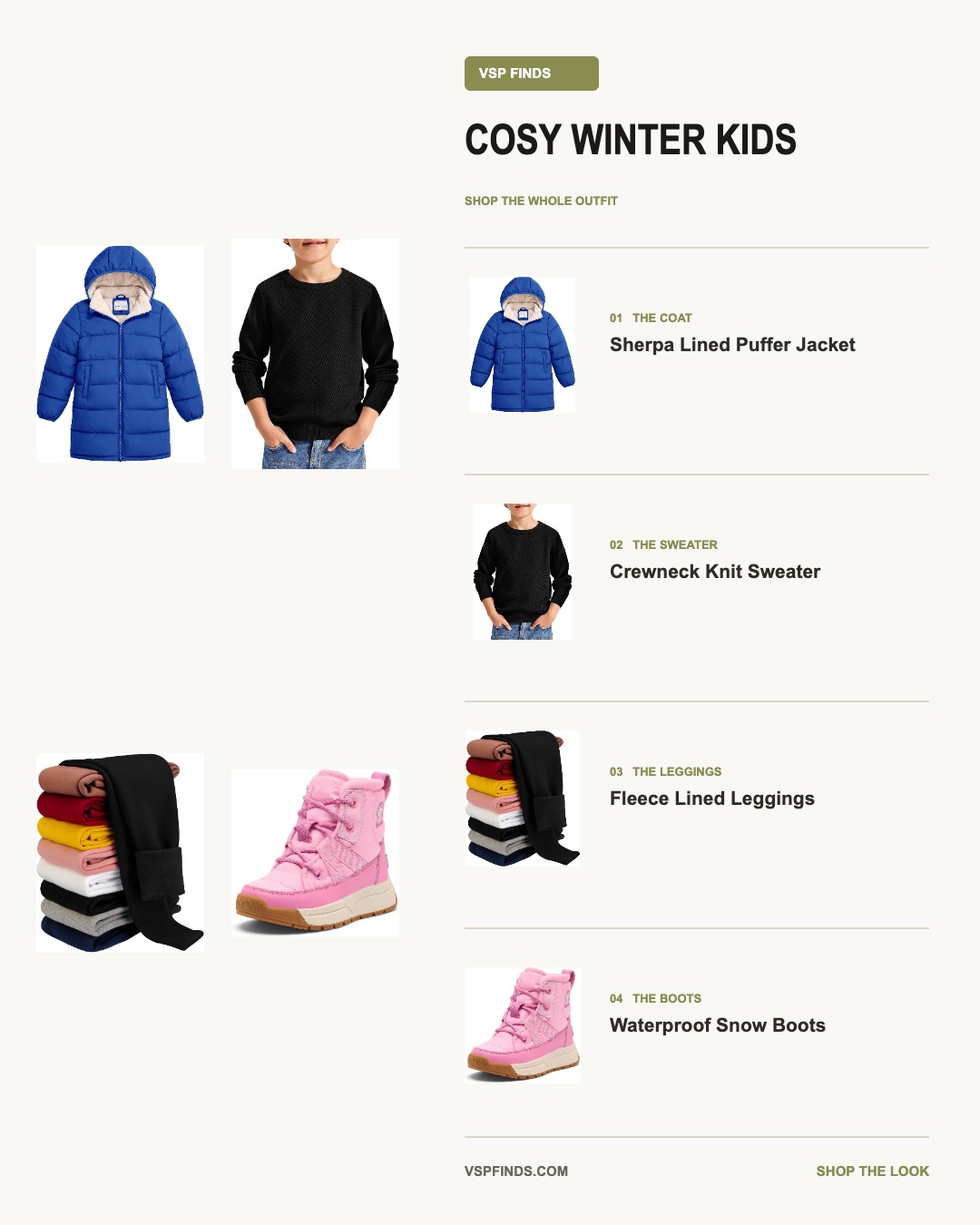
Cold-weather clothes for children fail in one of two ways: warm but so bulky they cannot move, or light enough to play in and useless below freezing.
This set splits the difference. A sherpa-lined puffer for the outside, a knit sweater for indoors, fleece-lined leggings under everything, and a waterproof boot that actually keeps feet dry.
Shop the look
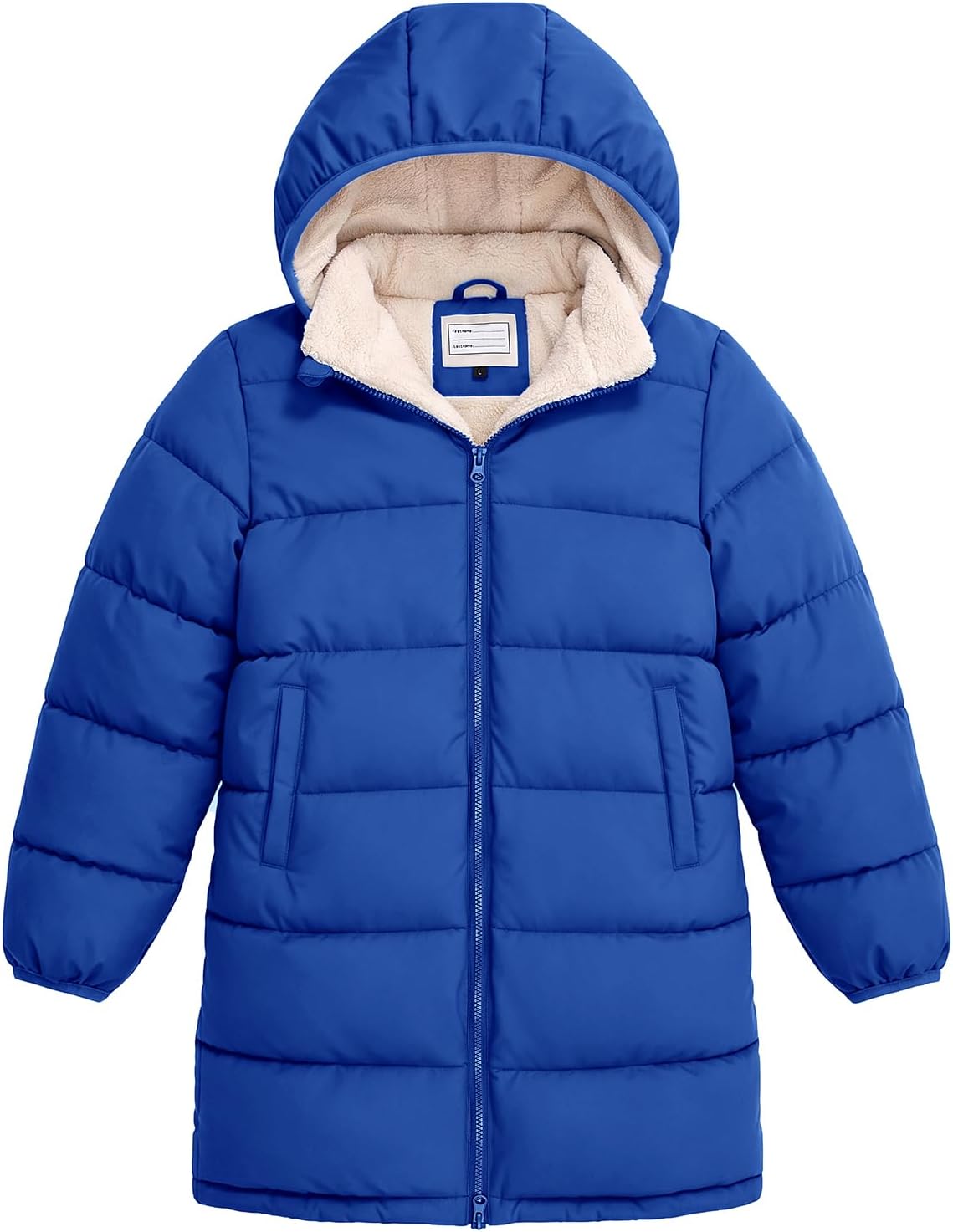
Sherpa Lined Puffer Jacket
Puffer shell with a sherpa lining and a hood. Warm without the weight, and the hood means one less thing to lose.
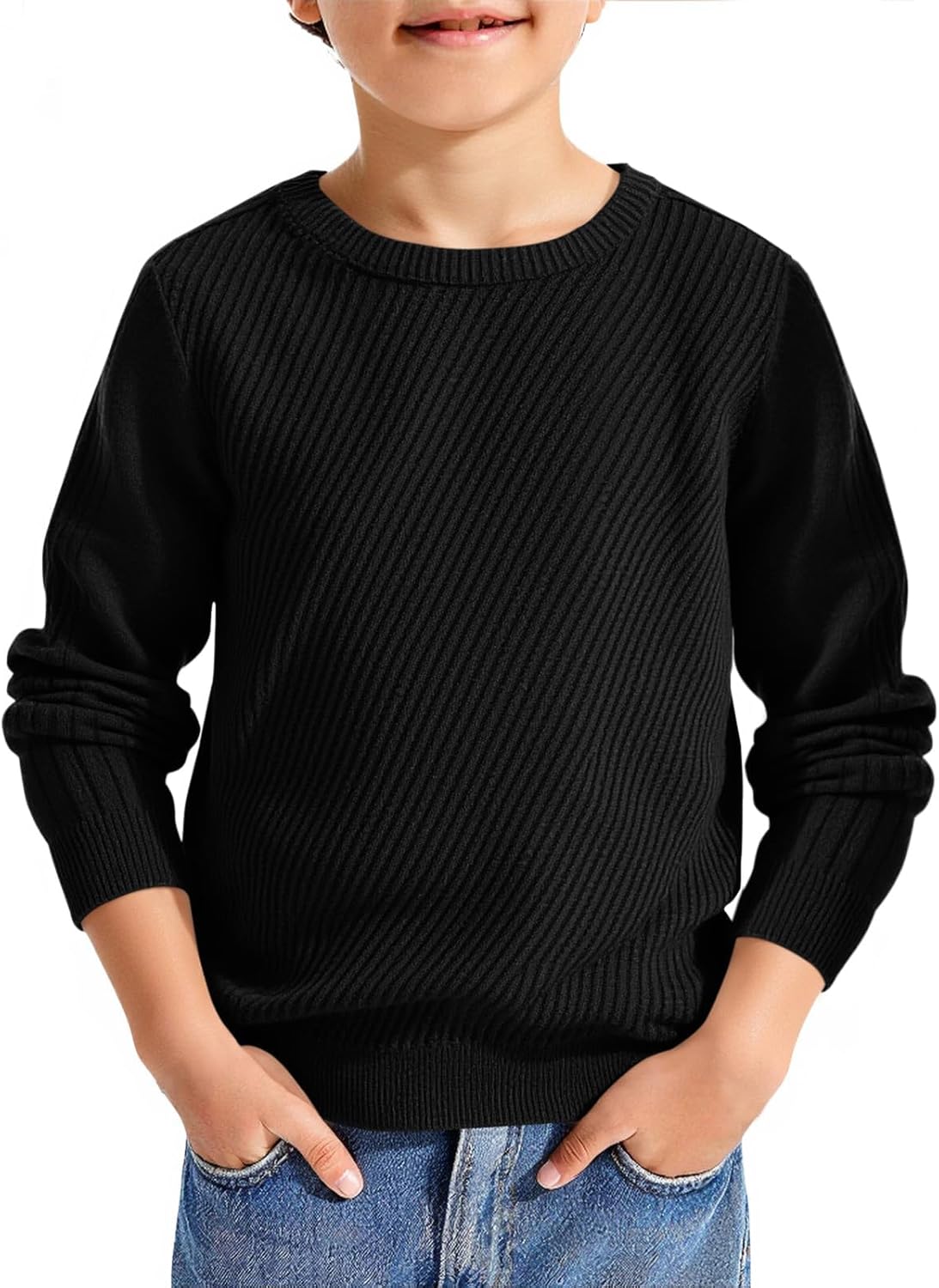
Crewneck Knit Sweater
Textured crewneck knit. The indoor layer, so it needs to look tidy enough for school and wash like everything else.

Fleece Lined Leggings
Fleece on the inside, smooth on the outside. Goes under trousers on the coldest days or worn alone indoors.

Waterproof Snow Boots
Properly waterproof and insulated with a grippy sole. Wet feet are what ends a winter afternoon early.
Why this combination works
Warmth is layers, not thickness. A thin fleece-lined legging plus a knit plus a puffer beats one enormous coat, because they can strip back indoors instead of overheating in a classroom.
The puffer is doing the wind and wet, the sherpa lining is doing the warmth, and the knit is doing the indoor half of the day. Each piece has one job, which is why none of them is bulkier than it needs to be.
Waterproof boots are the piece worth spending on. Everything else can be replaced cheaply as they grow, but cold wet feet will cut every outing short regardless of how good the coat is.
A final word on fit. Winter kit sized too large is genuinely colder, not warmer, because the air pocket next to the skin never warms up. Size the base layers snugly and save the extra room for the outer shell.
Storage matters too. Hang the puffer rather than folding it, and let boots dry fully overnight away from a radiator. Both simple habits add a season to pieces that would otherwise be dead by February.
How to wear it
Leggings first, always. Putting them under school trousers or jeans adds real warmth for almost no bulk and comes off if the classroom is hot.
Leave the puffer slightly loose over the knit. Compressing a down or sherpa layer squeezes the air out of it, which is exactly what makes it warm.
Boots half a size up with a thick sock. Toes need room to move to stay warm — a snug boot is a cold boot.
Common questions
Is a sherpa lining warm enough for snow?
For play and school runs, yes. For a full day out in deep snow, add a thermal base layer underneath rather than a bigger coat.
Can the leggings be worn on their own?
Indoors and on milder days, yes. In wet weather put something over the top — fleece lining holds water once it is soaked.
How do I stop them overheating indoors?
That is what the layers are for. The rule is coat off at the door, sweater stays on, leggings under everything.
Do snow boots work for everyday school?
They are heavier than a school shoe, so most families keep them for outdoor days and weekends and use a normal shoe otherwise.
Related looks and guides
Every look we build lives in one place. Browse the full wardrobe at VSP Wardrobe and shop any outfit end to end.