VSP Finds is reader-supported. When you buy through links on our site, we may earn an affiliate commission at no extra cost to you.
Tracking your blood pressure at home is one of the simplest ways to stay on top of your heart health between doctor visits. The best monitors are accurate, easy to read, and store your readings so you can spot trends. We compared five popular blood pressure monitors to help you choose a reliable companion for daily wellness.
OMRON Iron Upper Arm Blood Pressure Monitor

Product Description
OMRON is one of the most recommended brands for home monitoring, and this upper-arm model pairs trusted accuracy with an easy-fit cuff. Clear readings and dependable performance make it a confident pick for tracking heart health over time.
Amazon Basic Care Upper Arm Blood Pressure Monitor

Product Description
This value-focused monitor offers a wide-range arm cuff and intelligent inflation for comfortable, straightforward readings. It covers the essentials at a budget-friendly price, making home monitoring accessible to nearly anyone.
Oklar Upper Arm Blood Pressure Monitor

Product Description
A no-fuss upper-arm machine with a clear display and simple operation, this budget pick keeps things easy for daily use. The adjustable cuff and straightforward readouts make it approachable for first-time users.
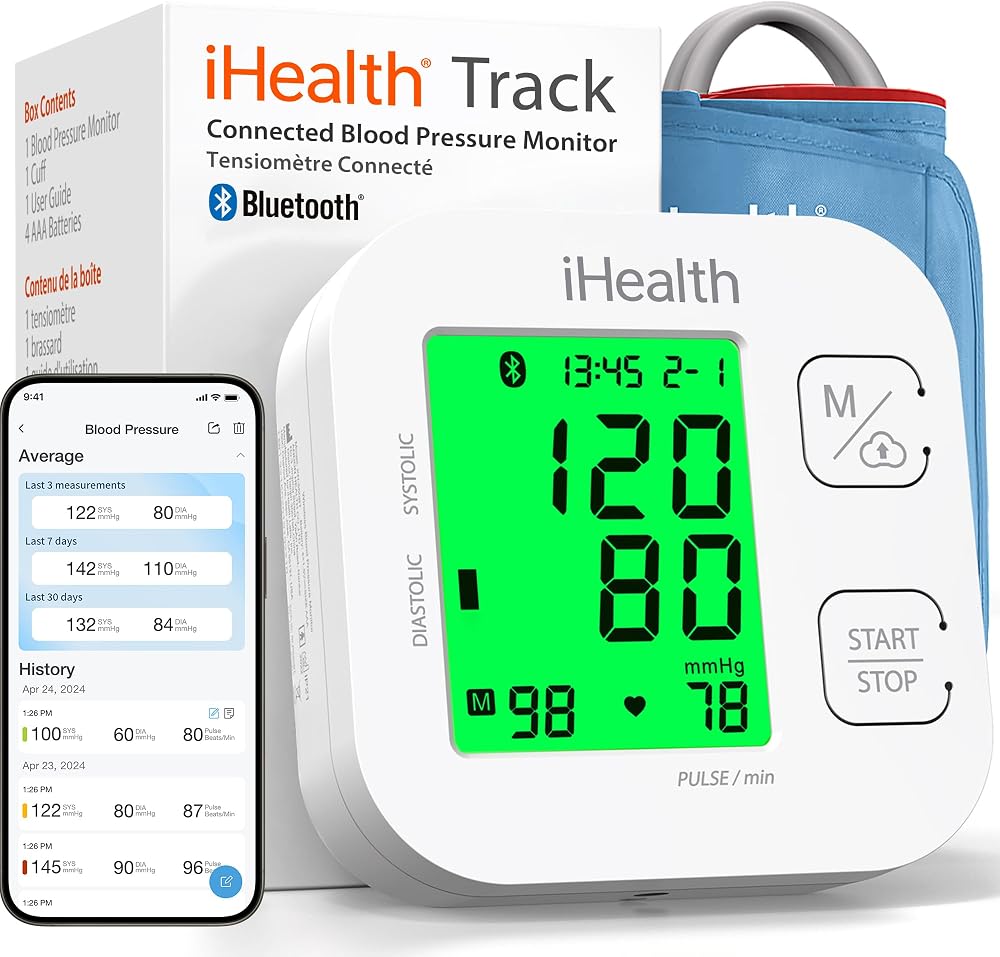
iHealth Track Smart Blood Pressure Monitor
Product Description
The iHealth Track connects to an app so you can log, chart, and share readings effortlessly. For those who want to track trends digitally and keep a tidy history, this smart upper-arm monitor is a standout.
Oklar Rechargeable Wrist Blood Pressure Monitor

Product Description
This rechargeable wrist monitor is compact and travel-friendly for checking readings on the go. With FDA clearance and easy operation, it is a convenient option for those who prefer a wrist-based device.
How to choose blood pressure monitors
Choose the right cuff style. Upper-arm monitors are generally considered the most accurate for home use and are recommended by most health organizations, while wrist monitors offer portability and convenience. If precision is your priority, an upper-arm model is the safer choice.
Get the cuff size right. An ill-fitting cuff is the most common cause of inaccurate readings, so check that the cuff range matches your arm circumference. Many monitors offer wide-range or adjustable cuffs, which help ensure a snug, accurate fit.
Consider memory and connectivity. Built-in memory lets you track readings over time, and app connectivity makes it easy to log trends and share data with your doctor. A large, clear display and multi-user storage are useful if more than one person will use the device.
Frequently asked questions
Are home blood pressure monitors accurate?
Quality upper-arm monitors from established brands can be very accurate when used correctly. For best results, use the right cuff size, sit quietly with your back supported and feet flat, rest your arm at heart level, and take readings at consistent times. It is also wise to validate your device against your doctor’s readings.
Should I choose an upper-arm or wrist monitor?
Upper-arm monitors are generally more accurate and are recommended for most people. Wrist monitors are smaller and more portable, which can help if an arm cuff is uncomfortable, but they are more sensitive to position. If you choose a wrist model, follow the positioning instructions carefully.
Related fitness guides
- Best Fitness Trackers
- Best Magnesium Supplements
- Best Fish Oil Supplements
- See all fitness & wellness finds
Final thoughts
A home blood pressure monitor turns heart health into something you can actually see and track. OMRON’s upper-arm models lead on trusted accuracy, while smart options like the iHealth Track shine for digital logging. Match the cuff to your arm, take readings consistently, and you will have meaningful data to share with your doctor. This is general wellness information and not a substitute for medical advice.